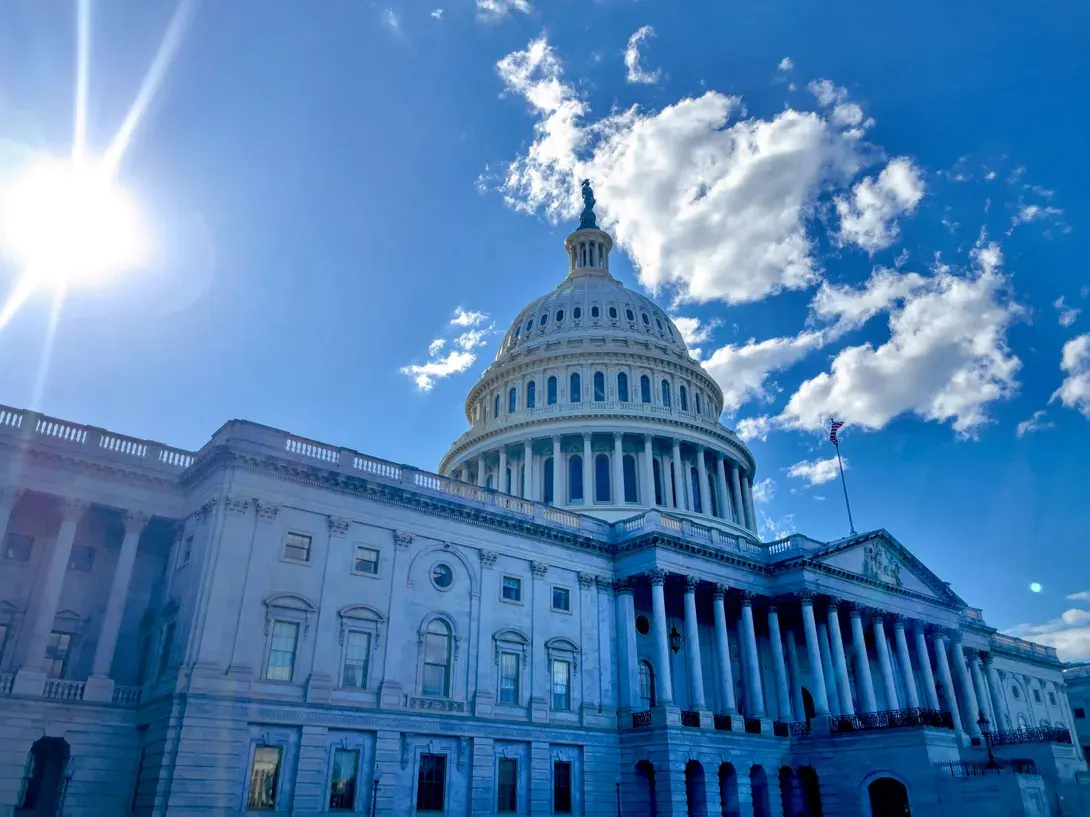
The Democratic sweep of Congress has given new urgency to questions facing broadcasters who have been planning around a more accommodating FCC. How quickly can a deal get approved? How long might it take to deliver the promised savings? And how much confidence should investors place in ownership rules that remain vulnerable in court?
Brendan Carr still runs the commission. Donald Trump still occupies the White House. Republicans still hold the FCC majority. But beginning in January, Democrats will control the congressional committees that can demand documents, call executives to testify and examine how the administration has exercised its regulatory power.
The pressure to consolidate will continue as political advertising recedes and television’s underlying economics return to the foreground. The political and legal friction surrounding those deals could increase at the same time.
Carr Still Has The Votes
The election does not change the FCC’s leadership or voting majority. The president nominates commissioners and designates the chairman; Senate confirmation applies to commission appointments. Carr and fellow Republican Olivia Trusty retain their 2–1 majority over Democrat Anna Gomez and can continue making policy.
The immediate question is whether Republicans strengthen that position before January. Danielle Thumann Severs, a Carr adviser nominated by Trump to become a third Republican commissioner, has a November 10 confirmation hearing scheduled. Confirmation would give Republicans enough members to constitute a quorum without Gomez’s participation. If the nomination slips into 2027, Senate Democrats could block it or negotiate over minority representation.
Gomez’s holdover service can extend through the end of the 2027 congressional session unless a successor takes office sooner. An entirely Republican commission could also face a legal challenge over partisan-balance requirements. Appointment negotiations therefore carry consequences for the agency’s ability to act.
Carr has reason to advance ownership proceedings and transaction reviews before January. Required procedures still apply, but broadcasters should expect an active lame-duck period.
Once the new Congress convenes, Democrats’ strongest counterweight will be congressional oversight. Rewriting ownership law or imposing binding spending restrictions generally requires presidential approval or a veto override. Hearings and investigations do not. Depending on submission dates and the congressional calendar, late-year rules may also qualify for renewed Congressional Review Act scrutiny, although Trump could veto resolutions overturning them.
For broadcasters, oversight can carry commercial costs. Hearings cannot themselves unwind a merger, but they can subject local-news promises, pricing assumptions and communications with regulators to sustained examination. Executives could be defending transactions long after receiving approval.
Carr’s combination of deregulation and aggressive licensing oversight creates particular exposure. His Project 2025 chapter advocated relaxing ownership restrictions. His interventions involving broadcasters raise separate questions about editorial independence. Companies can support acquisition flexibility while resisting regulatory pressure on programming.
The ABC dispute illustrates the tension. Disney and its stations allege that accelerated license reviews constitute retaliation for protected expression; the FCC says it is investigating possible unlawful discrimination. Courts will assess legality, while Congress could examine how the proceeding was initiated and handled.
Congress cannot simply dismiss Carr, and Trump still chooses the chairman. The question for broadcasters is how much of Carr’s agenda can be implemented—and defended—under substantially closer scrutiny.
Approval Is Only The Beginning
Courts may have more immediate influence over broadcast dealmaking than congressional committees.
The FCC’s repeal of the 39% national ownership cap rests on disputed authority. Congress specified the limit in 2004 and excluded it from periodic ownership review; the commission maintains it can still change the rule. Under the Supreme Court’s Loper Bright decision, courts must independently determine the scope of that authority. The economic case for consolidation cannot settle the legal question.
Replacing a numerical ceiling with case-by-case review also gives FCC discretion greater weight. Buyers gain flexibility, while congressional investigators have reason to examine whether approvals apply consistent standards—and whether promised public benefits materialize.
Local acquisitions have a different foundation. The Eighth Circuit’s 2025 ruling vacated the prohibition on combining two top-four stations while preserving the two-station limit. Duopolies that satisfy applicable national limits may therefore proceed without relying on Carr’s cap repeal, although other FCC requirements and antitrust law still apply. That could favor acquisitions within existing markets over national combinations carrying greater regulatory and financing uncertainty.
Nexstar–Tegna illustrates the gap between approval and execution. Nexstar completed the acquisition in March, but a preliminary injunction subsequently restricted further integration. An antitrust trial is scheduled for July 2027. Questions about local concentration and retransmission leverage survive ownership deregulation.
For investors, that becomes a cash-flow problem: financing costs can precede anticipated savings. Integration delays can erode returns even if the buyer ultimately prevails. Through 2027, the ability to finance the wait may matter as much as securing FCC approval.
Localism Needs Proof
Claims that a merger supports local news will carry more weight when a company can show what it preserved or improved. Aggregate programming hours tell only part of the story: a longer news schedule does not necessarily mean more reporting or greater editorial independence.
The same demand for specifics could extend to network-affiliate economics and spectrum policy. Bigger station groups still face disputes over streaming rights, programming charges and advertising revenue. ATSC 3.0 and alternative spectrum uses raise questions about consumer costs, free television and public-service obligations. Favorable technical rulings alone cannot resolve those commercial and political questions.
Through early 2028, continued deregulation under closer scrutiny looks more plausible than a wholesale policy reversal. Some transactions will proceed; others may face delays, conditions or restructuring. Companies should account for that uncertainty in their bids, financing and operating plans.
The strongest case for consolidation will withstand examination beyond the FCC: sustainable economics, credible competitive benefits and demonstrably preserved or improved local service. For buyers and investors, the value of an approval increasingly depends on what holds up after the vote.
Local News To Peruse:
- Democrats Prepare To Boost FCC Scrutiny After Midterm Elections - Claire Bernard [Bloomberg Government]
- Ted Cruz Aims To Stack FCC With Republicans Before Democrats Take Senate Control - Jon Brodkin [Ars Technica]
- As Political Ad Spending Skyrockets, Broadcast TV Remains King - Katie Robertson [New York Times]
- Broadcasters, Enjoy The Midterm Windfall. Will Billionaires Buy Again? - Mike Blinder [Editor & Publisher]
- Scripps Is Cutting Anchors And Adding Reporters. Is This The Future Of Local TV News? - Kerwin Speight [Poynter]
- Forcing NextGen TV On Consumers Is A Sign That Broadcast Has Already Lost The Race - Matthew Keys [LinkedIn]
- Is the Requirement That Broadcasters Give Lowest Unit Rates To Political Candidates Unconstitutional? The Republican Party Files A Lawsuit To Find Out [David Oxenford - Broadcast Law Blog]
- WXLO To Localize Ad Content On Boston Boosters - Lance Venta [RadioInsight]
- Blockgraph, FreeWheel Expand Location-Based TV Ad Targeting - Matthew Keys [TheDesk]